History & Origin of Nutmeg
Nutmeg’s origins are rooted in the Islands of the Maluku archipelago in eastern Indonesia, a cluster of remote volcanic islands known to history as the Spice Islands. For centuries, these islands were the only place on Earth where nutmeg grew naturally, making them one of the most strategically contested territories of the early modern world.
Arab traders introduced nutmeg to European markets as early as the 6th century, but it was the Portuguese who first established a direct sea route to the Banda Islands in the early 1500s, breaking the Arab merchant monopoly and triggering a new era of colonial competition. The Dutch eventually seized control of the islands in the early 17th century through the Dutch East India Company (VOC), enforcing an extraordinarily brutal monopoly on nutmeg and mace production that lasted nearly two centuries. During this period, nutmeg was among the most valuable commodities in the world, used in European cuisine, medicine, and perfumery.
The monopoly began to erode in the late 18th century when the French and British managed to transplant nutmeg trees to their own colonial territories — including Grenada in the Caribbean, Penang in present-day Malaysia, and parts of India and Sri Lanka. This geographical diffusion ended the Banda monopoly but did not displace Indonesia from its position as the dominant global producer, a role it has maintained to the present day.
Nutmeg Producing and Sourcing Countries
Indonesia
Indonesia accounts for between 60 and 75 percent of the world’s nutmeg supply, making it by far the most important origin for international buyers. The crop is cultivated across a wide range of islands, with the highest concentration found in Maluku, North Sulawesi, West Sumatra, Papua, and Aceh.
North Sulawesi stands out as one of the highest-yielding regions, producing over 13,500 tonnes from approximately 33,000 hectares. North and South Maluku together contribute a substantial share of the national total, historically significant as the original Banda nutmeg heartland. Papua is notable for its large cultivated area, over 31,000 hectares, though yields remain comparatively modest.
Indonesian nutmeg production is dominated by smallholder farmers, with approximately 98 to 99 percent of cultivation carried out using traditional methods on small family plots. This fragmented, non-industrialised production base is both the defining structural characteristic of Indonesian nutmeg and the primary driver of quality inconsistency across the supply chain. Farmers typically sell fresh or dried fruit to local collectors, who consolidate volumes before selling on to processors and exporters.
Indonesia’s total nutmeg production has fluctuated significantly over the decades due to climatic disruptions. The 2004 Indian Ocean tsunami severely affected production in Aceh, halving national output. More recently, El Niño and La Niña weather cycles have driven output swings, highlighting the inherent supply risk that buyers must account for when building sourcing strategies. Total production has generally ranged between 38,000 and 44,000 tonnes in recent years, with preliminary figures for 2025 suggesting continued output in this range.
Export volumes reflect Indonesia’s dominant position. In 2025, Indonesia exported over 19,400 tonnes of nutmeg, with China, Vietnam, and the European Union as the primary destination markets. Mace exports reached over 5,400 tonnes in the same period, with India and Vietnam absorbing the majority of that volume.
Other Nutmeg Producing Regions
Beyond Indonesia, a small number of other countries contribute to global nutmeg supply, though none approaches Indonesia’s scale or market influence.
Grenada, in the Eastern Caribbean, is the second most recognised origin and produces a variety of Myristica fragrans (same species as Banda nutmeg) valued for its quality. Grenadian nutmeg commands a premium in certain markets due to its distinct flavour profile and traceable production, though volumes are modest compared to Indonesian supply.
India, particularly the states of Kerala and Tamil Nadu, maintains a domestic nutmeg industry of regional significance. Indian production is predominantly absorbed by the domestic food industry and by export to neighbouring South Asian markets. Sri Lanka similarly cultivates nutmeg, though at a limited scale.
Papua New Guinea produces a distinct botanical variety, Myristica argentea (commonly referred to as Papuan or “long nutmeg”) which is characterised by a different flavour profile and lower volatile oil yield compared to Banda nutmeg. While it is traded commercially, Papuan nutmeg is generally considered inferior for food-grade applications, and its undeclared blending with Banda nutmeg constitutes economic adulteration — a significant quality risk that buyers should be aware of when establishing procurement specifications.
Different Applications in Food, Beverages and Personal Care
Food Industry
In food manufacturing, nutmeg is a foundational spice ingredient with applications across a wide range of product categories. In the bakery sector, it features in sweet baked goods, pastries, and spice blends where warm, slightly sweet aromatic notes are required. In dairy, it is used in cheese preparations, cream sauces, and ready-made culinary sauces — particularly béchamel, where nutmeg is an established ingredient.
Processed meat and sausage manufacturers rely heavily on nutmeg as part of complex spice blends, particularly in European markets. Soup and sauce manufacturers, ready meal producers, and savory seasoning blenders are consistent industrial buyers of both whole and ground nutmeg formats.
Mace is valued in premium food applications including high-end spice blends, confectionery, and refined sauces. It offers a flavor profile that is similar to nutmeg but slightly sweeter and more floral, making it a preferred ingredient where a more delicate aromatic character is desired.
Beverage Industry
Fragrance and Personal Care
Nutmeg essential oil is a commercially significant ingredient in fragrance formulation. Its warm, woody, spicy character makes it a useful top and middle note in oriental and woody fragrance compositions. The oil is also used in personal care formulations, including certain topical preparations and massage products, for its aromatic properties.
The volatile oil content of the nutmeg kernel is one of the primary quality parameters for industrial buyers — a minimum of 6.5 ml per 100 grams on a dry basis is the standard threshold for commercial acceptance in whole nutmeg for food-grade use. Higher volatile oil content generally commands a premium and is particularly relevant to buyers sourcing for extraction and flavouring applications.
Nutmeg Quality and Processing
Quality in nutmeg is determined at multiple stages of the supply chain, beginning at harvest and extending through drying, shelling, and sorting before export.
The nutmeg fruit naturally splits open when ripe, revealing the seed enclosed in its hard shell and surrounded by the mace aril. Harvesting is done by hand, either by collecting fallen fruit or by gathering directly from the tree. After harvest, the mace is carefully removed and dried separately, while the nutmeg in its shell is dried to reduce moisture content.
The drying stage is the single most critical quality control intervention in nutmeg processing. Proper drying must bring moisture content below 10 percent as quickly and hygienically as possible. Failure to achieve this threshold creates the conditions for aflatoxin development — the most significant food safety risk associated with Indonesian nutmeg and the primary reason the European Commission has mandated a 50 percent physical check frequency for all Indonesian nutmeg consignments at the EU border.
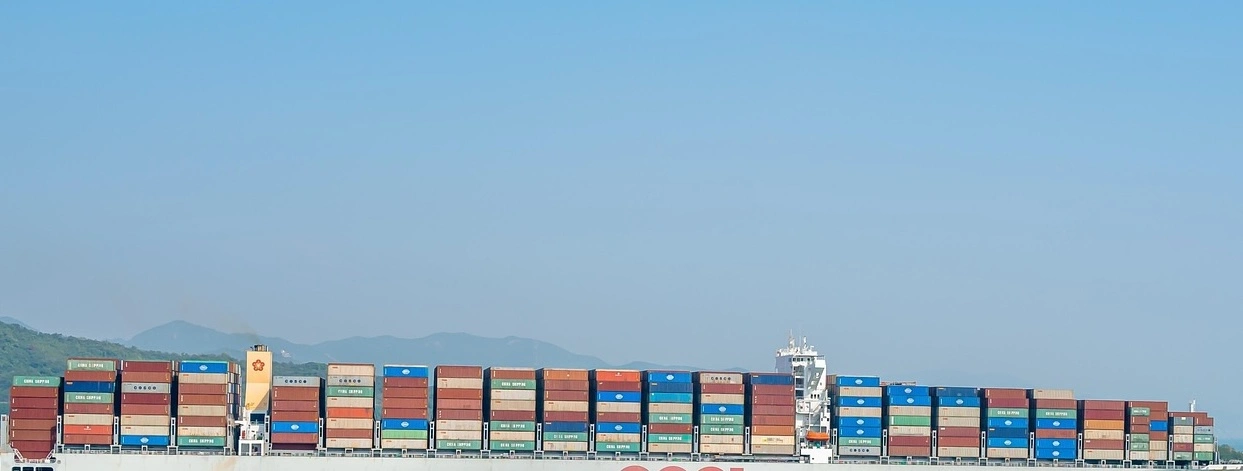
Aflatoxin contamination is particularly challenging because it may not be detectable at the time of pre-shipment testing but can develop during the one to two months of maritime transit. This characteristic makes moisture-controlled drying and rigorous cold-chain management essential — not optional — components of a compliant supply chain.
Once dried, nuts are shelled and the kernels are sorted and graded. Responsible processors source directly from farmer groups or dry the fresh fruit themselves, providing greater control over moisture management than buying pre-dried product from collectors. Buyers evaluating suppliers should prioritise those who can demonstrate direct control over post-harvest handling and drying protocols.
Nutmeg Commercial Grading
Grade ABCD / AB Nutmeg
The highest quality tier is Grade ABCD or AB, which consists of whole, shelled nutmegs that are visually uniform, free from defects, and meet the size specifications required for premium food-grade applications — particularly whole nutmeg sold in retail or foodservice packaging where appearance matters. Within this grade, nuts are further calibrated by count per kilogram: 60/65 count designates very large, premium-sized nutmegs; 80/85 count represents a standard large size widely traded in the European market; and 100/110 count refers to smaller nuts. Larger, heavier nuts with a lower count per kilogram command a price premium.
It is important for buyers to understand that high-grade ABCD nutmeg represents only a small fraction of the total volume processed from raw material. Achieving a full container of 80/85 grade ABCD nutmeg typically requires processing approximately 80 tonnes of raw material for every one tonne of final sorted product, which explains the significant cost differential between grades and the tendency of exporters to sell across multiple grade tiers.
Grade SS: Sound Shriveled
Grade BWP: Broken, Wormy, Punchytured Nutmeg
Nutmeg Formats Available for Industrial Buyers
The commercial format in which nutmeg is purchased depends significantly on its intended application, and buyers sourcing at industrial scale typically specify format alongside grade to ensure fit for purpose.
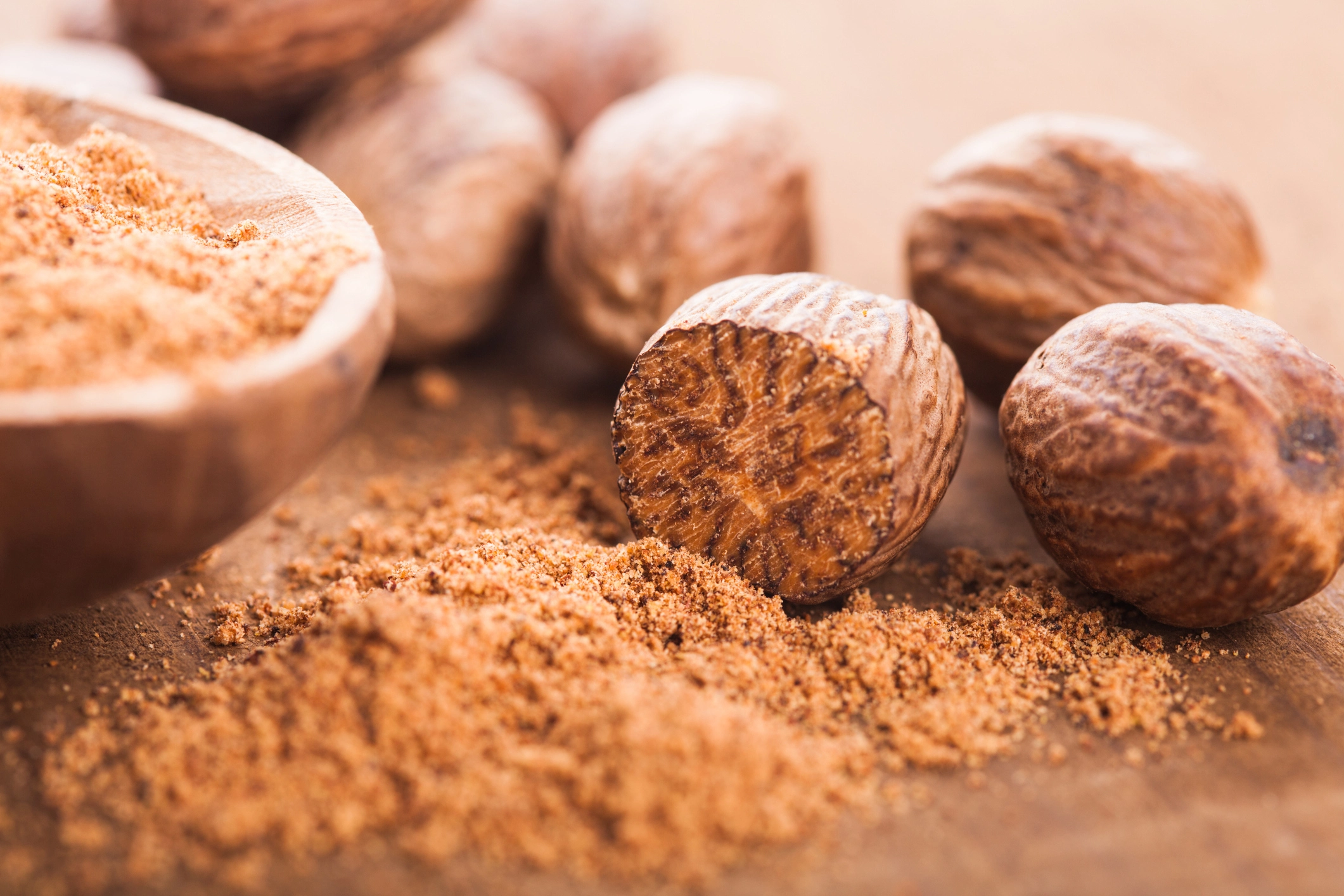
Whole nutmeg in its shell is the most stable format for long-distance transport, offering natural protection for the kernel and extended shelf life. It is typically purchased by processors who shell and grind the product at destination, or by industrial buyers who require the intact kernel for further processing.
Shelled whole nutmeg (the kernel without its outer shell) is the standard commercial format for food manufacturers using whole nutmeg in seasoning blends, ready meals, and premium applications. It is classified according to the grade system outlined above, with size calibration agreed contractually.
Ground Nutmeg: Ideal for industrial applications
Mace
Mace is supplied either as whole dried blades, broken mace, or in ground form, and is priced at a significant premium relative to nutmeg due to the small quantity yielded per fruit and its more specialised demand profile.
At De Monchy Natural Products, we source nutmeg directly through our operations in Indonesia, applying a rigorous multi-layered quality protocol that includes pre-shipment testing by ISO 17025 accredited laboratories, on-arrival verification in Rotterdam, and careful supplier selection based on supply chain traceability and food safety certification. Our range covers multiple grades and formats to serve the specific requirements of food manufacturers, flavour houses, and fragrance producers.
To request a pricelist or discuss your nutmeg sourcing requirements, contact our ingredients team or visit our nutmeg product page.