Vanilla is one of the world’s most prized natural flavoring ingredients, yet its journey from a Mexican orchid to a global raw material spans centuries of discovery, trade, and agricultural ingenuity. In this guide, we explore the origins and history of vanilla, break down the main botanical varieties and their distinct flavor profiles, examine the key producing regions that shape sourcing decisions, and walk through the different cured vanilla formats available to ingredient buyers and manufacturers.
At De Monchy Natural Products, we source vanilla directly from producing regions with fully backward integration.
Whether you are new to vanilla procurement or looking to deepen your sourcing expertise, this article covers everything you need to know about natural vanilla as a raw material. If you are ready to discuss volumes and specifications, request a quotation from our sales team.
Introduction : Vanilla native to Mexico
Discovery of Manual Pollination Technique
For centuries, every attempt to cultivate vanilla outside of Mexico failed. The reason: the vanilla orchid relies exclusively on the Melipona bee (also native to Mexico) for natural pollination. This limitation confined commercial vanilla production to its region of origin until 1841, when Edmond Albius, a young enslaved man on Réunion island, discovered that the flower could be hand-pollinated using a small wooden splinter. This technique, developed in the 19th century, remains the global standard for vanilla cultivation today.
Hand pollination is an inherently labor-intensive process, and it is one of the primary reasons why natural vanilla commands a premium in the raw material market (for current pricing & volumes dynamics, see our Vanilla Global Market Report). The vanilla flower blooms for only a few hours once per season. If pollination does not occur within that narrow window, no pod will develop. For procurement professionals and ingredient buyers evaluating vanilla sourcing, understanding this constraint is essential to appreciating both the value and the supply chain complexity of this raw material – a topic further explored in our analysis of US tariffs and their impact on vanilla.
Tlilxochitl – a Complex Name for a Complex Spice
The Aztecs called the vanilla bean tlilxochitl – a name as layered as the ingredient itself. Natural vanilla is one of the most chemically intricate spices available to food and flavor manufacturers. It contains at least 250 distinct flavor and aroma compounds, of which vanillin is only one. This complexity is precisely what distinguishes natural vanilla extract raw material from synthetic alternatives.
When a formulation relies solely on pure vanillin, the resulting flavor profile tends to be flat and one-dimensional. In contrast, products flavored with natural vanilla (whether in extract, powder, or whole bean form) deliver a rich, well-rounded organoleptic profile with multiple layers of aroma and taste. For product developers in food and beverage, flavor houses, and fragrance companies, this distinction is critical when selecting vanilla ingredients for premium applications.
Three Main Varieties of Vanilla: Planifolia, Tahitensis, and Pompona Vanilla Beans
Three commercially relevant varieties of vanilla are available on the market today: Vanilla Planifolia, Vanilla Tahitensis, and Vanilla Pompona. Each variety presents a distinct flavor signature relevant to different formulation needs.
Vanilla Planifolia is the most widely cultivated and traded variety. It is characterized by a deep, rich, and creamy flavor profile, the benchmark for most industrial vanilla applications.
Vanilla Tahitensis offers a markedly different sensory profile: sweet, floral, and fruity, with delicate notes often described as reminiscent of cherries and raisins, with anise-like undertones. This variety is particularly sought after in premium fragrance and specialty food applications.
Vanilla Pompona, while far less common in global trade, presents smoky, sweet, and occasionally spicy notes: a niche ingredient of interest to formulators seeking distinctive flavor differentiation.
📦 Our Grades and Pricing – Explore our Vanilla Product Range
Vanilla Origins
Origin Plays a Significant Role in Determining the Unique Flavor Profile of Cured Vanilla
Variety alone does not determine the character of a cured vanilla bean. Origin is equally, if not more, influential. The terroir in which the orchid is grown, the local climate, and the traditional post-harvest curing methods practiced in each producing country all contribute materially to the final composition and organoleptic profile of the raw material.
For ingredient buyers and vanilla sourcing professionals, understanding origin is fundamental to making informed procurement decisions. Our sourcing origins provide a detailed overview of each producing country where we operate.
Madagascar Vanilla
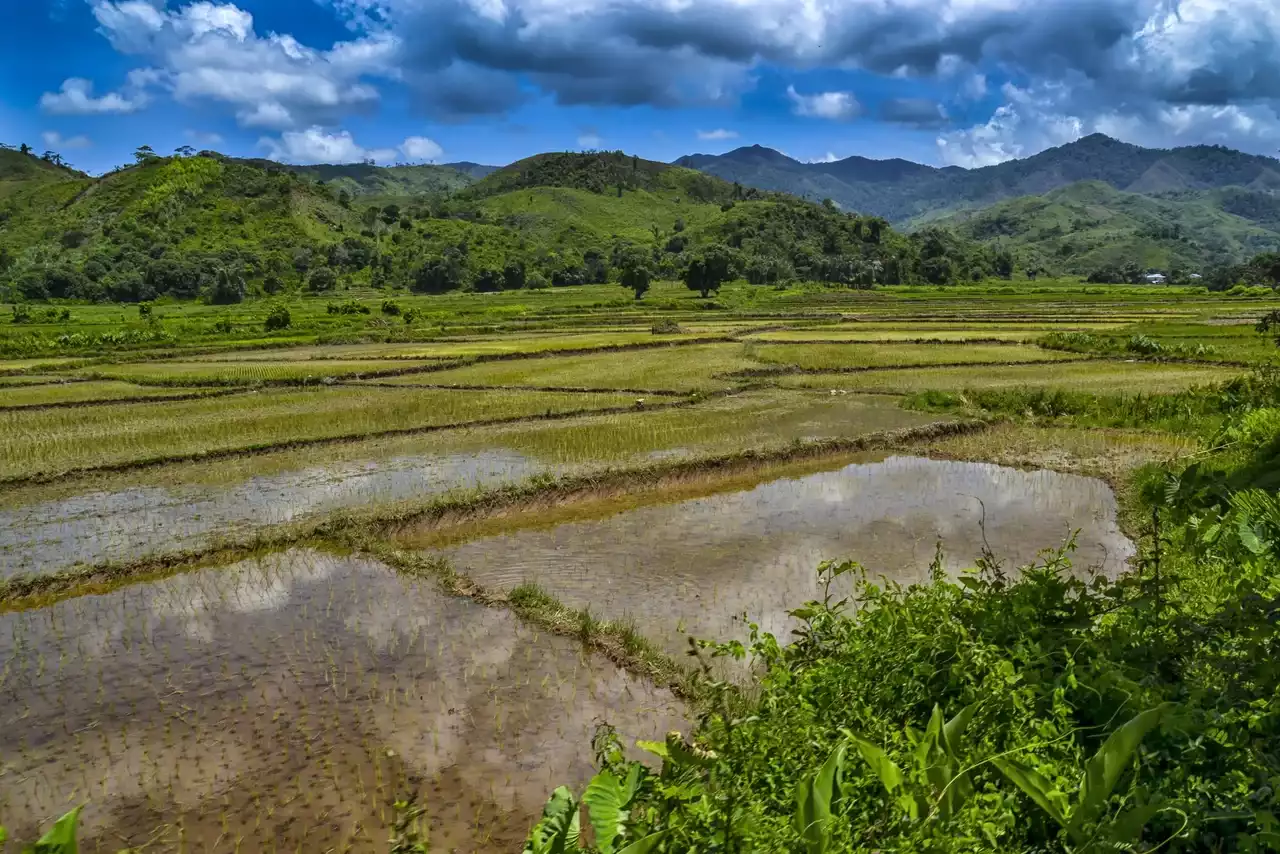
Madagascar is the world’s dominant vanilla-producing country and accounts for the vast majority of global vanilla bean supply. The primary species cultivated is Vanilla planifolia, grown predominantly in the northeastern coastal region known as the Sava. This area, part of our Madagascar sourcing region, benefits from fertile, loamy soils, high humidity, and consistent rainfall from the Indian Ocean – conditions that are exceptionally well-suited to vanilla orchid cultivation.
Madagascar vanilla is commonly marketed under the designation “Bourbon vanilla,” a term that traces its origins to Réunion island, historically known as Île Bourbon. Today, the Bourbon classification may technically apply to vanilla originating from any island in the regional cluster – including Réunion, Comoros, Mauritius, Seychelles, and Madagascar itself – but in practice, the overwhelming share of Bourbon vanilla traded internationally is sourced from Madagascar. For bulk vanilla beans buyers and natural vanilla suppliers serving the food manufacturing sector, Madagascar Bourbon vanilla remains a core origin.
Indonesia Vanilla
Indonesia is one of the key origins for vanilla raw material sourcing, supported by the archipelago’s tropical climate: high humidity, low wind, and seasonal monsoon rainfall. These conditions support diverse agricultural cultivation, including vanilla orchid farming across multiple islands where our Indonesian operations are established.
Most Indonesian vanilla is Vanilla Planifolia, sharing the variety’s characteristic richness and creaminess. However, due to the distinct local climate, soil composition, and traditional curing practices, Indonesian Planifolia also exhibits a notable smokiness alongside earthy undertones, a profile, documented in our Indonesian vanilla product range, that sets it apart from Madagascar origins and makes it well-suited to certain flavor applications.
Indonesia also produces Vanilla Tahitensis in very limited quantities, which presents with a shorter, more plump pod than Planifolia. Its sensory profile is defined by delicate floral and fruity aromas with subtle licorice notes, appealing for fragrance applications and specialty food and beverage formulations.
Uganda Vanilla: Alternative Planifolia Vanilla
Uganda ranks among the leading vanilla exporting countries in Africa and represents a growing and reliable origin for industrial vanilla supply. Ugandan vanilla is exported in multiple formats – whole beans, seeds, and powder – primarily to markets in the United States and Europe. Explore our Uganda vanilla specifications for detailed grading and availability.
A distinguishing logistical advantage of Uganda as a sourcing origin is its dual-harvest calendar. Unlike most vanilla-producing regions, Uganda’s equatorial climate allows for two harvests per year: one in December and one during June and July. This biannual cycle, supervised through our Uganda sourcing hub, can provide procurement managers with greater supply flexibility and a reduced risk of single-season shortfalls.
Papua New Guinea: A more affordable Tahitensis Vanilla
Tahitensis vanilla from Papua New Guinea has earned a distinct reputation among flavor and fragrance buyers. Visually, these beans are easily identified by their exceptionally dark, near-black appearance. They are notably oil-rich and carry a highly distinctive floral and spicy aroma profile that differentiates them from other Vanilla Tahitensis origins.
The sensory uniqueness of Papua New Guinea Tahitensis has driven growing interest from product developers seeking differentiated natural vanilla raw material for premium applications. As demand for origin-specific vanilla continues to increase across specialty food, beverage, and fragrance markets, Papua New Guinea has become an increasingly important origin within the vanilla sourcing landscape. See our PNG Tahitensis vanilla for current grades and specifications.
Cured vanilla – Different Forms of the Raw Material
Cured vanilla is available in several distinct product formats. The appropriate format depends on the intended application, processing requirements, and target concentration of flavor compounds in the finished product.
Vanilla Beans: Gourmet and Extraction Pods
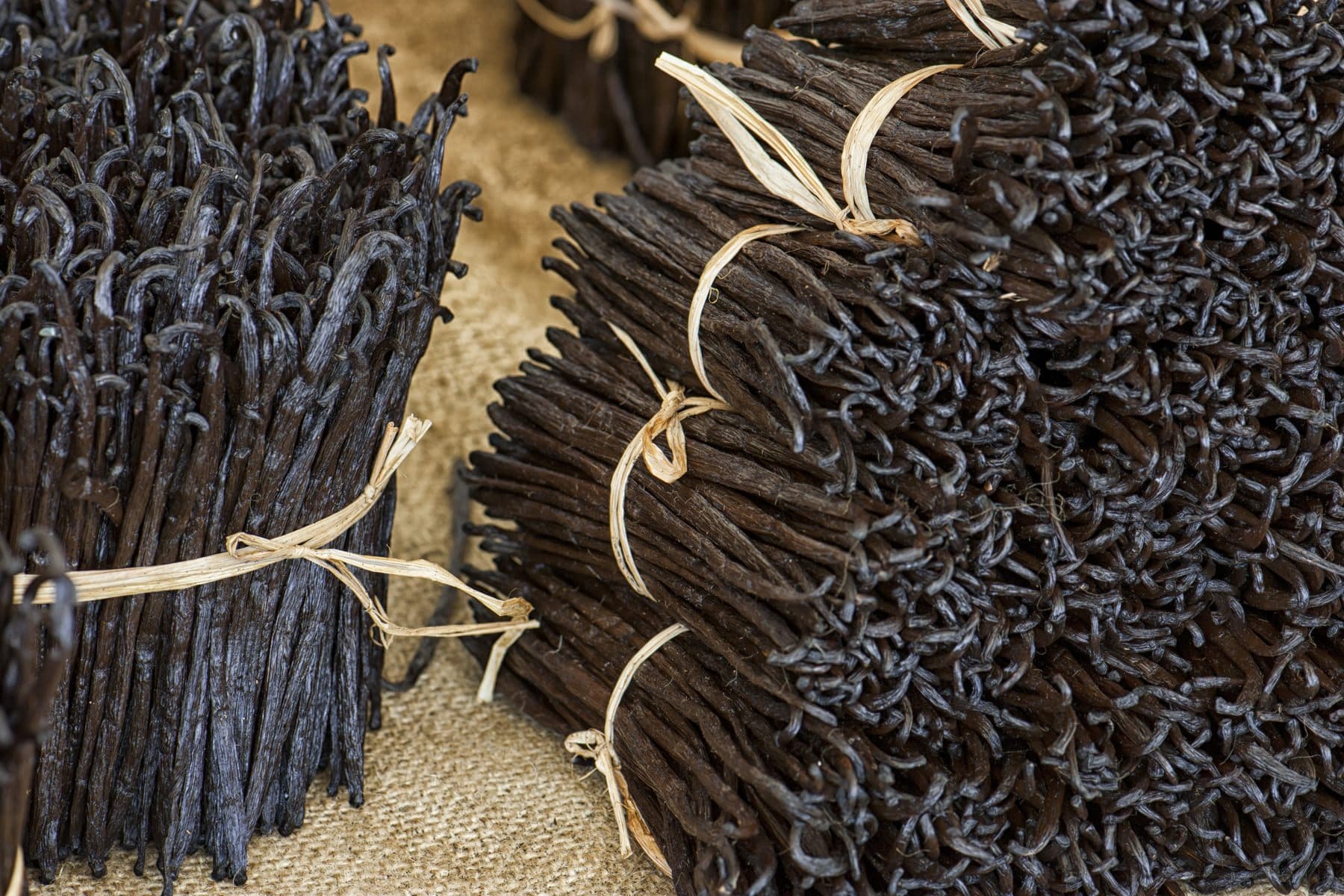
Vanilla beans (also referred to as vanilla pods) are the base raw material for both direct flavoring use and vanilla extract production. Within the vanilla beans wholesale market, two primary commercial grades are recognized, differentiated principally by moisture content and physical characteristics: Gourmet grade and Extraction grade.
Gourmet grade vanilla beans are characterized by higher moisture content (typically 30% or above), a plump and pliable structure, and a visually rich appearance. They contain a high concentration of vanilla caviar, the seeds of the pod, and exhibit visible oiliness associated with elevated vanillin content. These attributes make them the preferred format for culinary applications, artisanal food production, and any use case where the physical presentation of the bean is relevant.
Extraction grade vanilla beans are specifically designed for industrial extract production. They are drier and less pliable than Gourmet grade, and within this category there is further segmentation: whole beans, split beans, and cuts (the last being the driest and most brittle). The selection of Extraction grade is determined by the target vanillin concentration in the finished extract. All grades undergo rigorous testing as part of our quality assurance and food safety framework. Lower moisture content in the raw material translates to greater extract concentration per unit volume, a critical variable for flavor manufacturers and industrial vanilla buyers optimizing cost-efficiency.
To compare grades and discuss pricing by origin, request a tailored quotation.
Vanilla Seeds: Caviar
Vanilla caviar refers specifically to the pure seeds extracted from inside the vanilla pod. As the part of the bean with the highest vanillin concentration, vanilla caviar delivers a powerful, direct aroma and is the most potent form in which vanilla seeds are commercially available.
It is important for procurement professionals to distinguish vanilla caviar from related but distinct product formats. Vanilla powder is produced by grinding whole vanilla beans (pods and seeds together) into a fine powder. Because the ground husk dilutes the overall vanillin concentration, vanilla powder carries less intensity per unit weight than caviar alone, though both share comparable applications. Vanilla paste, by contrast, is typically a blend of ground vanilla beans or seeds with vanilla extract, and in many commercial formulations, is also sweetened – limiting its use to sweet applications such as desserts, confectionery, and pastry.
For manufacturers evaluating vanilla ingredients across formats: vanilla powder integrates well with dry blending processes, while vanilla paste is more suited to liquid incorporation. Vanilla caviar and vanilla powder are unsweetened and applicable across both sweet and savory product categories.
Spent or Exhausted Vanilla: Reduce, Reuse, Recycle
Post-extraction vanilla – commonly referred to as spent or exhausted vanilla – is a byproduct with meaningful secondary commercial applications. Rather than representing waste, spent vanilla beans and their ground husks can be repurposed across several use cases relevant to vanilla raw material buyers.
Spent vanilla seeds and husks are commonly used to add visual texture to products already flavored with vanilla extract: delivering the characteristic black speck appearance associated with premium vanilla without the full cost of primary-grade material. In paste manufacturing, spent material can be combined with vanilla extract to achieve the desired balance of visual and aromatic properties. Additionally, spent vanilla is used in the tea industry, where its faint residual aroma complements blends requiring a subtle vanilla background note.
For ingredient buyers focused on sustainable sourcing and cost optimization, spent vanilla represents a practical and increasingly valued component of the vanilla raw material supply chain.