In the world of Cinnamon, we must distinguish between 2 main categories: Ceylon Cinnamon which mostly comes from Sri Lanka, as its name suggests, and Cassia Cinnamon which can be broken down into further subspecies from different origins.
It is worth noting that one of the most striking differences between Cassia and Ceylon Cinnamon is that the former has a thicker bark and the latter has a more mild and delicate flavor.
For the purpose of this article, however, we will focus on Cassia.
The Cassia Tree
The Cassia market is mostly comprised of 3 different subspecies:
Indonesian Cassia (Cinnamomum Burmannii)
Also known as Korintje Cinnamon or Java Cinnamon. This species grows mostly on the island of Sumatra, particularly in an area on the base of Mount Kerinci in the Jambi province, hence its Korintje name.
Vietnamese Cassia (Cinnamomum Loureiroi)
Also known as Saigon Cinnamon, this species is mostly found in Vietnam. Most of the Vietnamese Cassia is found in the Yen Bai province although some is also found in the Quang Nam province.
Explore our Vietnamese Cassia products
Chinese Cassia (Cinnamomum Cassia)
Chinese Cassia, as per its name, is commonly found in Southern China.
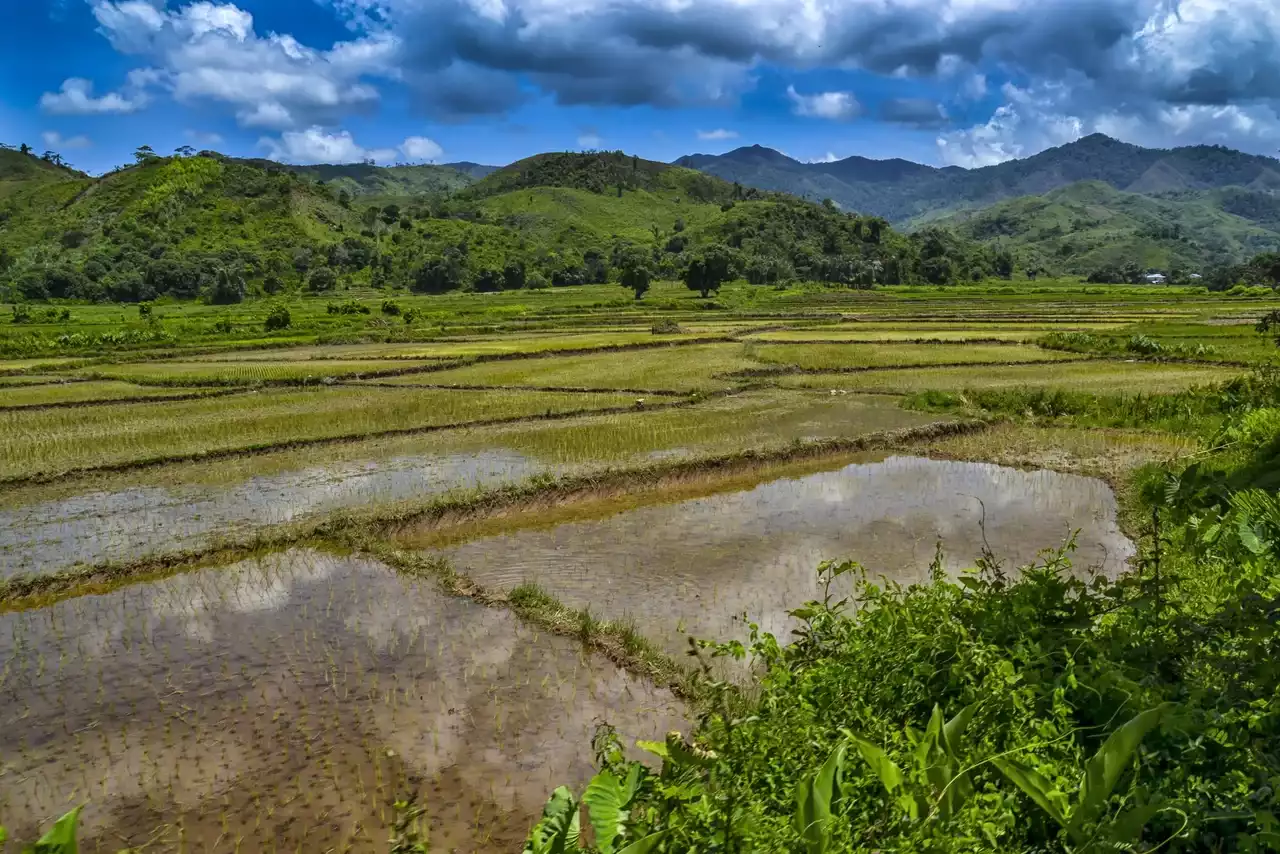
Cassia trees of various origins grow in a humid and warm climate with significant rainfall. It can be found at sea level, but thrives on hilly grounds at higher altitudes. The time between planting and harvesting is counted in years, with the older trees offering the thickest bark with the highest volatile oil content after 10 to 15 years!
Harvesting and Conditioning
Once the tree is mature enough, its bark is ready to be harvested. First, the tree is cut down and the outside of the bark is scraped clean. Then, the bark itself is expertly cut and peeled from the tree, in order to have large unbroken pieces. An alternative method is to cut and peel the bark from the tree first and then scrape the outside of it.
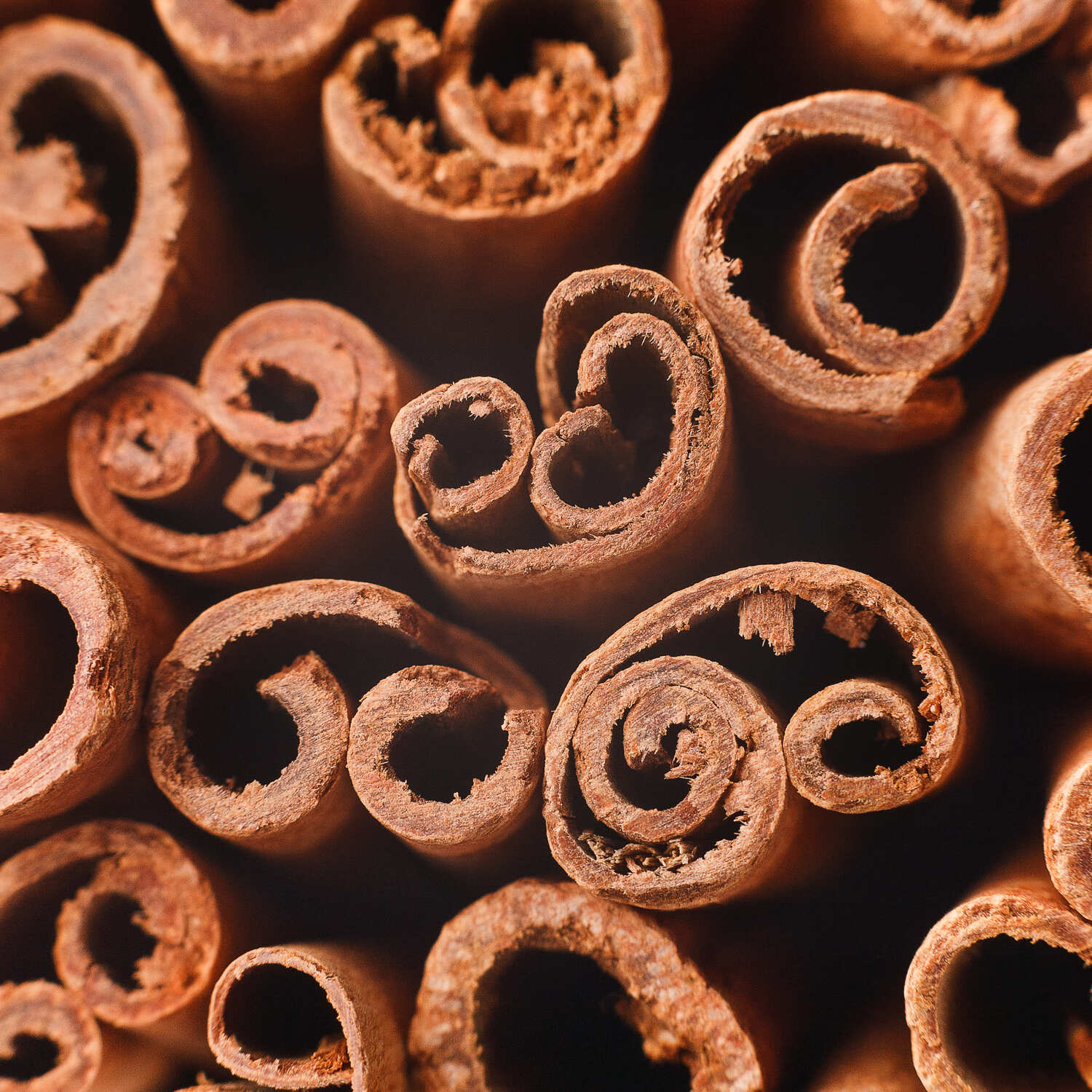
Since the tree cannot live without its bark, the wood from the tree can be harvested for various applications where wood is required.Once peeled and scraped, the bright orange pieces of bark are left in the sun to dry where they will harden and curl up into long sticks of 1m or more!
After sorting for different thicknesses, these long sticks are then packed in bundles, ready to be sent for processing.
Different parts of the tree yield different qualities
As explained previously, the older the tree, the thicker the bark and the higher the volatile oil content is. The volatile oil content is what gives Cassia its typical aroma and taste and is the parameter by which its quality is measured, along with its shape and appearance.
Starting from the base of the trunk, we find the oldest part of the tree with the thickest bark. This will yield KA quality which has the highest volatile oil content, up to 3.5%.
Moving on to thick branches and the top part of the trunk, we move to the KB quality, which yields thinner bark with a volatile oil content of up to 2.5%.
Finally, we are left with smaller branches which, due to being the youngest part of the tree, have a thinner bark and as such a low volatile oil content up to 1.5%.
Derivative products from Cassia bark
As we mentioned earlier, the freshly dried bark is packed in long stick bundles for further processing. It is at this stage that the moisture content is first controlled to make sure the sticks are sufficiently dry. They are then sorted again depending on their thickness and appearance for different products, as detailed below:
Broken and Clean:
These are chips of crushed cassia bark which come in different qualities: KABC, KBBC and KCBC, from high to low volatile oil content respectively. It is also at this stage that the crushed cassia goes through strong magnets to trap any metal which could be present (if necessary, this is the time for steam sterilization). From there, it may be sold as is or may be further processed into powder.
Powder:
If so desired, the crushed cassia can also be milled into a powder. This process also makes use of magnets at various stages to catch any possible metal fragments.
Short Sticks:
Long sticks of the appropriate diameter are selected to be cut into shorter sticks of generally 4 to 10cm, depending on the customer’s requirements. This process is labor intensive as after cutting, the sticks must be manually sorted for visual appearance and foreign material inside the quills. Passing through a series of magnets is also part of the process to remove any piece of metal.
This is also the opportunity to sort the sticks between VA type and VAA. VAA sticks have a smaller diameter and a more uniform, pleasing appearance.
Sticks may also be further processed into washed sticks (CWVAA). The sticks are bathed in water where they uncurl so that they can be brushed by hand inside and outside. They are then left to dry again either in the sun or in dry ventilated rooms away from the rain. When drying, the sticks curl up again into small tubes. Although labor intensive, the final product has the best visual appearance.
As per the customer’s requirements, the sticks may be heat- or steam treated.
Cassia by DMNP: A natural extension of our supply
As a backward-integrated supplier, De Monchy Natural Products presence in Indonesia in direct contact with local farmers and partners allows us to provide high quality throughout the whole supply chain. In tandem with our Indonesian and Papua New Guinea vanilla operations in the region, supplying Indonesian Cassia collected from the island of Sumatera is a natural extension of our product range.